Starburst Galaxy Centaurus A
Its proximity to Earth makes Centaurus A an ideal target for studying active galactic nuclei and their role in galaxy evolution.
NASA30 Jul 20261 min read
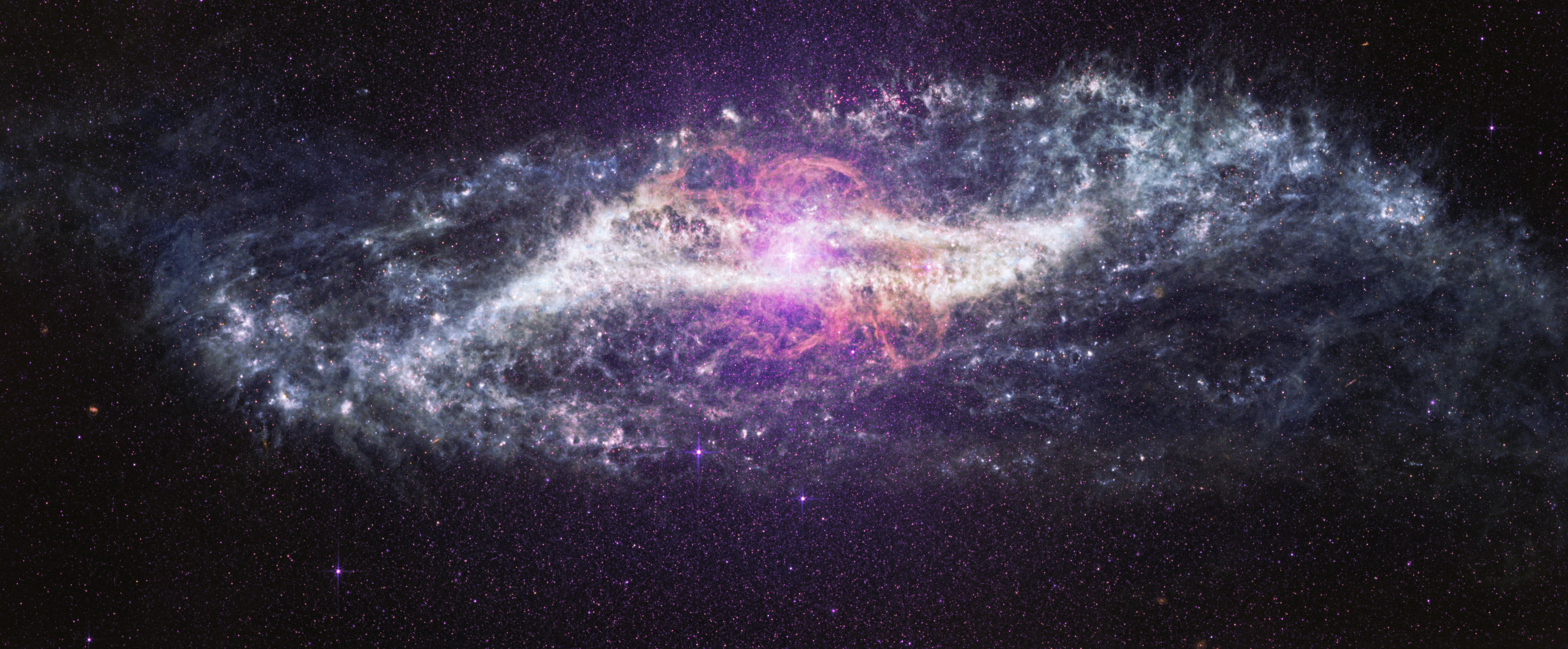
In this July 6, 2026, image, NASA’s James Webb Space Telescope’s Mid-Infrared Instrument (MIRI) reveals the nearby galaxy Centaurus A, exposing the dusty structures and hidden activity that shape this unusual system. Centaurus A is 11 million light-years away from Earth, relatively close in cosmic terms. Yet, unlike most nearby galaxies, it is very active, […]
Continue at NASA
Overseex summarises and files this story. The reporting itself belongs to NASA.
Keep up with what matters
One email a week with the stories worth your time.
Related coverage
Dust and Water in Sagittarius A*
3d ago1 min read
Webb Opens Treasure Chest
3w ago1 min read
Colorful Collage of Tarantula Nebula
3w ago1 min read